Thursday, September 12, 2013

Voyager 1 and Lettuce Plants in Space?

Today's articles discuss how Voyager 1 has officially left our solar system and the possibility of growing food such as lettuce in space.

Latest Articles on Space

-Voyager I has left the solar system, NASA announces.
On September, 5th 1977 the Voyager 1 left the Earth. Thirty six years later, NASA officials have announced that the space probe has left our solar system. It has become the farthest man made object ever to fly in our universe. It is now more than 11 billion and half billion miles away from Earth. When would this space craft make it out of our solar system and actually reach another star? It would take more than 40,000 years for Voyager 1 to reach our nearest star. By 2025, Voyager 1 will most likely lose its nuclear fuel and its equipment will shut down. The major governmental space agencies and private industries need to continue to develop the capability of going faster in our solar system. Major ideas have been theorized and some projects are in the beginning stages of testing. Its going to take the funds, dedication, and ideas in order to get humanity into deep space sometime in the next century.

-NASA sending lettuce plants into space.

NASA scientists at the Kennedy Space Center are working on a microwave sized plant system that would allow for plants to grow in space. It is scheduled to go up into space during the SpaceX flight on December 9th, 2013. However, the astronauts will not eat this lettuce. They will let it grow, freeze it, and sending it back to Earth for further testing to make sure it is safe to eat in orbit. Other plants that NASA is looking at testing include radishes, bok choy, and zinnas. Plants that have roots such as carrots can't be grown in space, as of yet. Obviously, growing food in space would be a huge step towards exploring and colonizing in space. The effort and cost it would take to send food by ship would make it impossible to build a base on the moon or fly on a deep space mission to Mars.

Credit to Yahoo.com for the image.

Tuesday, September 10, 2013

Apple's New iPhone and More...

Today's article will focus on the information that Apple released earlier today. 

 Phil Schiller, senior vice president of worldwide marketing for Apple Inc, talks about the pricing of the new iPhone 5C at Apple Inc's media event in Cupertino, California September 10, 2013. REUTERS-Stephen Lam

-The iPhone 5C comes in five different color - blue, green, pink, yellow, and white.

-The price for an iPhone 5C starts at $99 with a contract, or $549 without one. The pricier "5S" starts at $199 with a contract and comes in three colors gray, silver, and gold. It also comes with a new feature that has been rumored for months - finger scanner technology.

-A less expensive iPhone will allow Apple to enter the Chinese market, were it was more difficult to get the previous versions.

-This iPhone has similar dimensions to the iPhone 5. It has a similar retina display and processor of the iPhone 5.

-The iPhone 5C weighs 4.65 ounces, while the iPhone 5S only weighed 3.95 ounces.

-It also includes a separate chip, called the "M7 Motion co-processor", which can track motion data continuously without heavily draining the battery.

- The iPhone 5S includes an 8 megapixel iSight camera and a new FaceTime camera, but doesn't include a finger scanning system that the iPhone 5C has. 

-The product will be available for pre-order September 13th and available to all on September 30th.

Credit to Reuters.com and Nbcnews.com for the story. Credit to Reuters for the image.

Monday, September 9, 2013

Robonaut and Smartwatch Possible Capabilities?

Today's articles discuss a big step for NASA's Robonaut and the possibility of what the Smartwatch might be able to do in the next generation devices.

Latest Articles on Technology

-One big step for robots: "Robonaut" to get legs.
NASA is set to launch Robonaut in their next mission to space using SpaceX spacecraft. It is set to launch sometime in late January 2014. Rob Ambrose who runs the project says that adding legs to this robot will help astronauts around the space station, to take over some tasks within the space craft. Robonaut will be required to do some daunting tasks that astronauts once had to do, but now Robonaut will be there to do it for them. Former astronaut Steve Hawley, a professor of astronomy at Harvard University says that in the future robots will take over tasks for humans that are dangerous or time consuming; ones that don't need human assistance. As robots get more advanced in their nature, they will continue to change society and they way humans live.

-Smartwatch is the next step in "Quantified Self" Life Logging.

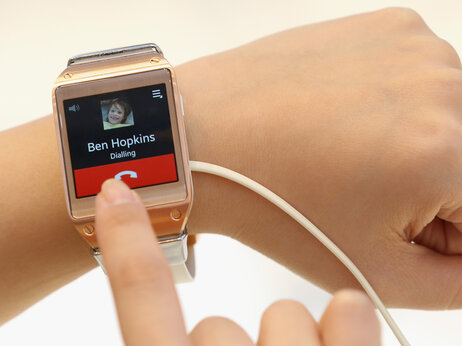
Samsung's new Galaxy Gear smartwatch marks a new generation of wearable devices.
As written earlier, Samsung and Qualcomm finally unveiled its Smartwatch. Brad Feld, a venture capitalist from Boulder Colorado says that once these watches continued to get developed, they could bring new innovations. For example, since this watch touches a person's skin it could act like an organ and measure your temperature, pulse, or even record you quality of sleep. These type of devices could help humans more happy lives. This is the the idea of "quantified self". In the not so distant future, these smart devices could be like your own personal doctor recording data that could help a person live a more healthier life.

Credit to Npr.org for the image.

Saturday, September 7, 2013

Space Launches, Living on the Moon, and Samsung's Smartwatch Unveiled

Today's articles discuss a couple of successful spacecraft launches as well as the official reveal of Samsung's smart watch.

Latest Articles on Space

-Virgin Galactic SpaceShip Two completes second power flight.
Billionaire Richard Branson's commercial spacecraft had a successful space flight Thursday. It climbed over 40,000 feet in the air and will soon begin to fly commercially in the next year.  It will cost about $200,000 in order to fly on the plane. All of the objectives were successfully completed, says Virgin Galactic and it was a big step in the right direction for becoming a reality. More than 600 people have already signed up to fly on the space craft.

-NASA Launches Robotic Explorer to Moon.
NASA's latest unmanned robotic explorer successfully launched yesterday. Though it ran into equipment trouble, officials have said not to worry and it is set to get to the moon in about a month. It will study the Moon's atmosphere and the lunar dust that is on the Moon.

-Living on the Moon might be a problem?

Will we ever... live on the Moon?

One of the biggest problems of creating a colony on the moon is how to create a water source. There have been many reports suggesting that there is some water near the poles of the Moon, but now that may not be the case, new research shows. Research suggests that there is still a possibility of ice mixed with dust on the poles, but ice on the Moon has yet to be confirmed. More testing and observation needs to happen before scientists have an idea if there are traces of water on the Moon. A source of some type water needs to be on the Moon in order for colonizing the Moon. Importing water would be a financial burden and there needs to be a way to get water out of the moon. Until then,  settling on the Moon may run into some roadblocks in the near future.

Latest Articles on Technology

-Samsung Galaxy Gear Smartwatch revealed.

Samsung has revealed its long awaited Smartwatch. It is expected to be released later in September. Watch the video below to get a look and feel for Samsung's newest product.


Credit to Bbc.com for the image. Credit to Cnet.com for the video.

Wednesday, September 4, 2013

Samsung, Qualcomm Smart Watches and Apples Press Event

Today's articles discuss Samsung's Smart Watch details and the announcement of Apple's press event.

Latest Articles on Technology

-Report: Samsung to announce smart watch.
According to a report in Bloomberg, Samsung is set to announce it's smart watch sometime in September. This device will be able to check email, surf the web, answer phone calls, among other things. In the next year, look for the smart watch industry to explode in competition and innovation. Sony, Pebble, Qualcomm and I'm Watch already have smart watches on the market. Apple is also rumored to have an "iWatch" in the works.

-Apple confirms a September 10th event, expected to announce new iPhone.
Apple has confirmed a media event that is set to take place next week. It is expected to be the place were Apple announces the next iPhone. Like previously reported, this next iPhone will be an upgrade over all the rest. Rumors of finger print technology is the most innovation we've heard, but there are now analysts whispering about the idea of a cheaper iPhone.  Apple is also set to come out with different colors for the next iPhone, including a golden color. The big announcement is going to take place next Tuesday on the Apple Campus.

-Qualcomm set to join the now competitive smart watch market.


Qualcomm on Wednesday unveiled it's Toq smart watch. It allows the user to make phone calls, text, and read emails. For now Toq will only work with the Android system, but it is not out of question of them letting it work with the iOS system.  A person can get a watch and can even adjust the watch to fit their arm. This smart-watch is set to sell for about $300 and should be available sometime in mid-October. It will be interesting to see which smart watch becomes the most popular, as Samusung is set to release their smart watch around the same time as Qualcomm's.

Credit to Cnet.com for the image.

Monday, September 2, 2013

NASA Space Exploration Ideas and Rebuilding the Human Body

Today's articles discuss NASA's funding of future space exploration ideas and what the future holds for retooling a human body in the future.

Latest Articles on Space

-NASA funds six futuristic space technology ideas.

Mars Sample Return Mission Concept

NASA has granted funding to six next generation technologies that will hopefully help humans travel through space. Some of the ideas include a propellant-less spacecraft formation-flying and maneuvering with phonetic laser thrusters, a gravitational wave detector based on atom interferometer, and sample return systems for extreme environments.  All of these ideas and prototypes were made in college research centers in the United States. Will one day one of these ideas become a reality and help contribute to human space exploration? Time will only tell.

Latest Articles in Technology/Health

-The ability of rebuilding a human body - will it ever be possible?
A company known as Grindhouse Wetwares is in the early stages of designing products that one day could be built into a human. This is kind of like a cyborg type equipment you would see in a futuristic film. This trans-humanist movement is hoping one day that this technologies can make a human even more superior than before - such as running faster or living longer. Back in 2012, a group in Pittsburgh, Pennsylvania of programmers, engineers, and enthusiasts began testing the possibility the process of making this a possibility. There has been a few innovations they've worked on including a chip to store biomedical data and a sensor array that sends data to one's finger magnet. In the future, the idea of living longer, running faster, or jumping higher in "cyborg" humans will cause a heated debate as these technologies get more advanced as we head later into this century.

Credit to Space.com for the image.

Saturday, August 31, 2013

Unique Planet that Rains Glass and Launching Spacecraft from Virginia

The latest articles discuss an interesting discovery of a planet that rains molten glass and a moon probe  that is launching from Virginia for the first time ever.

Latest Articles on Space

-A blue planet that rains molten glass.

Artist’s Impression of the Deep Blue Planet HD 189733b

As I wrote yesterday, astronomers often discover new planets outside of our solar system, hinting at what type of planets are out there in our large universe. Discovered in 2005, this blue world (HD189733b) that looks a marble is about 63 light years away from Earth. Does this planet have a chance to harbor life? This world is unfriendly to life because on this planet the atmosphere produces molten glass that rains down on the planet all the time. During the day time, this planet's temperature is at a comfy 1700 degrees Celsius. There is no chance of life ever developing or surviving there. The search continues for a plane that has the conditions to harbor life.

-NASA prepares for first Virginia Coast launch to the moon.

NASA is set to launch a spacecraft to the moon on September 6th. It will be the first time that NASA has ever developed a spacecraft from the state of Virginia. The Lunar Atmosphere and Dust Environment (LADEE)  is a robotic mission that will orbit the moon and gather information on the Moon's atmosphere and lunar dust. It will test the atmosphere of the moon and collect data for a 100 day period.  It will hopefully answer the question about lunar dust that had been electrically charged by sunlight. Was it responsible for the pre-sunrise glow above the lunar horizon detected during several Apollo missions? We will have to wait and see.

Credit to Space.com for the image.