Showing posts with label health. Show all posts

Wednesday, September 18, 2013

Google's New Company, Orbital Sciences Cargo Launch, Elon Musk's New Project

Today's articles discuss the company that Google has announced that could help the health of humanity and Elon Musk's new plan to have his own automated cars on the road by 2020.

Latest Articles on Space

-New Space Cargo Ship makes first flight.

 Orbital Sciences launched its first unmanned Cygnus cargo ship into orbit from Wallops Island, Virginia, on Wednesday. 

 A space company known has Orbital Sciences launched its first ever cargo ship into space on Wednesday. The craft is expected to reach the International Space Station by Sunday and deliver supplies to the space craft. NASA and Orbital Sciences have a deal to continue for NASA to use their ships in order to deliver supplies to the ISS.

Latest Articles on Technology

-Elon Musk's next project: driver-less cars?
Elon Musk has been known for the creation of SpaceX and even the proposed plan of the next generation transportation system, but now he's looking into driver-less car technology. He wants Telsa Motors to begin making a driver-less car from complete scratch. Musk says that 90% of the cars controls would be left to the computer system itself. Has reported a few months ago, experts believe that drive-less cars (to an extent) will be out on the market by 2020.

Latest Articles on Health
-Google announces Calico, a new company that wants to help humanity live longer.
It's goal has a company is to solve some of the world's "biggest problems" such has illness, aging, disease, and ultimately death. Calico ultimate goal is to help everyone, at one time or another, are hurt because of a death of a family member, "“Illness and aging affect all our families. With some longer term, moonshot thinking around healthcare and biotechnology, I believe we can improve millions of lives.”

Credit to Cnn.com for the image.

Monday, September 16, 2013

Snake Robot to Mars and 'Body on a Chip'

The latest articles discuss an idea of a snake robot on Mars and a how a 'body on a chip' could lead for better drug tests.

Latest Articles on Space

-Snake Robot wants to be sent to Mars by the European Space Agency.
A new type of robot, being developed by the SINTEF Research Institute in Norway are looking into launching a robotic snake type machine up to Mars to help study the red planet. They started the project back in June and plan to have the project done by December. A snake shaped robot could fit into places that have never been seen before because of its shape and could help the world learn even more about Mars. There are still many obstacles for this project to ever become a reality, but the European Space Agency is already planning to launch a project known as ExoMars between 2016-2018, so this project could happen sometime in the next five to tens years.

Latest Articles on Health

-Tiny organs printed in 3-D aim for 'body in a chip' for better drug tests.

3D

Miniature human organs made from 3-D printing could "create a body on a chip" that enables for better drug testing in the future. This idea is being back by the United States Department of Defense. The 2 inch 'body on a chip' would represent a realistic testing ground for how the human body would react to bad sicknesses. This could speed of the drug testing process as instead of testing it on animals such as mice, scientists could test it out on human cells. They have the ability to print solid miniature organs such as livers, hearts, lungs, and blood vessels. In the end, this type of testing could help scientists quickly develop a drug or vaccine for fast moving pandemics or bio-terrorism attacks. 

Credit to Nbcnews.com for the image.

Saturday, September 14, 2013

Weather Satellite and Smart Phone Health Innovations

The latest articles discuss a long delayed weather satellite is on track for a 2015 launch and how smartphones are contributing to the medical industry.

Latest Articles on Space

-Long delayed space weather satellite on track for 2015 launch.

artist's concept of the Deep Space Climate Observatory (DSCOVR) satellite

The Deep Space Climate Observatory (DSCOVR) for short, passed a key review that determines its cost and schedule requirements. The satellite is designed to protect potentially Earth-threatening space weather that could cripple Earth's electrical grids, hobble satellites, and space flight. Originally called Triana, this satellite was first approved in 1998 before being tangled in political battles due to cost. It is finally set to be launched into space in the year 2015.

Latest Articles on Health

-When Smart Phones become a handheld doctor.
Currently, there are apps out on the smart phone market that can actually take care of some medical needs. There are some apps that give you possible sicknesses a person may have. There is now a company called EyeNetra, which will soon can give a person the ability to tell a person what type of glasses they may need. There are also other start up companies that are taking up the same idea by using the smartphone for health matters. Another company called Scanadu, are developing ways to measure a person heart rate, temperature, and blood oxygen levels. A company called Quanttus, are developing ways to measure a person's heart rate and blood pressure. In the future, phones and even your household will hold the tools to help diagnose a problem or advise a person. These are the beginnings stages of this, as start up companies are leading the way toward smart technology medicine.

Credit to Space.com for the image.


Thursday, September 12, 2013

Voyager 1 and Lettuce Plants in Space?

Today's articles discuss how Voyager 1 has officially left our solar system and the possibility of growing food such as lettuce in space.

Latest Articles on Space

-Voyager I has left the solar system, NASA announces.
On September, 5th 1977 the Voyager 1 left the Earth. Thirty six years later, NASA officials have announced that the space probe has left our solar system. It has become the farthest man made object ever to fly in our universe. It is now more than 11 billion and half billion miles away from Earth. When would this space craft make it out of our solar system and actually reach another star? It would take more than 40,000 years for Voyager 1 to reach our nearest star. By 2025, Voyager 1 will most likely lose its nuclear fuel and its equipment will shut down. The major governmental space agencies and private industries need to continue to develop the capability of going faster in our solar system. Major ideas have been theorized and some projects are in the beginning stages of testing. Its going to take the funds, dedication, and ideas in order to get humanity into deep space sometime in the next century.

-NASA sending lettuce plants into space.

NASA scientists at the Kennedy Space Center are working on a microwave sized plant system that would allow for plants to grow in space. It is scheduled to go up into space during the SpaceX flight on December 9th, 2013. However, the astronauts will not eat this lettuce. They will let it grow, freeze it, and sending it back to Earth for further testing to make sure it is safe to eat in orbit. Other plants that NASA is looking at testing include radishes, bok choy, and zinnas. Plants that have roots such as carrots can't be grown in space, as of yet. Obviously, growing food in space would be a huge step towards exploring and colonizing in space. The effort and cost it would take to send food by ship would make it impossible to build a base on the moon or fly on a deep space mission to Mars.

Credit to Yahoo.com for the image.

Monday, September 9, 2013

Robonaut and Smartwatch Possible Capabilities?

Today's articles discuss a big step for NASA's Robonaut and the possibility of what the Smartwatch might be able to do in the next generation devices.

Latest Articles on Technology

-One big step for robots: "Robonaut" to get legs.
NASA is set to launch Robonaut in their next mission to space using SpaceX spacecraft. It is set to launch sometime in late January 2014. Rob Ambrose who runs the project says that adding legs to this robot will help astronauts around the space station, to take over some tasks within the space craft. Robonaut will be required to do some daunting tasks that astronauts once had to do, but now Robonaut will be there to do it for them. Former astronaut Steve Hawley, a professor of astronomy at Harvard University says that in the future robots will take over tasks for humans that are dangerous or time consuming; ones that don't need human assistance. As robots get more advanced in their nature, they will continue to change society and they way humans live.

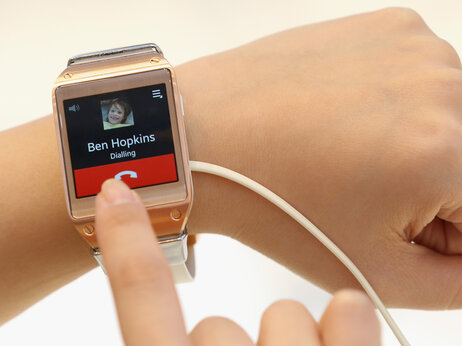
-Smartwatch is the next step in "Quantified Self" Life Logging.

Samsung's new Galaxy Gear smartwatch marks a new generation of wearable devices.
As written earlier, Samsung and Qualcomm finally unveiled its Smartwatch. Brad Feld, a venture capitalist from Boulder Colorado says that once these watches continued to get developed, they could bring new innovations. For example, since this watch touches a person's skin it could act like an organ and measure your temperature, pulse, or even record you quality of sleep. These type of devices could help humans more happy lives. This is the the idea of "quantified self". In the not so distant future, these smart devices could be like your own personal doctor recording data that could help a person live a more healthier life.

Credit to Npr.org for the image.

Monday, September 2, 2013

NASA Space Exploration Ideas and Rebuilding the Human Body

Today's articles discuss NASA's funding of future space exploration ideas and what the future holds for retooling a human body in the future.

Latest Articles on Space

-NASA funds six futuristic space technology ideas.

Mars Sample Return Mission Concept

NASA has granted funding to six next generation technologies that will hopefully help humans travel through space. Some of the ideas include a propellant-less spacecraft formation-flying and maneuvering with phonetic laser thrusters, a gravitational wave detector based on atom interferometer, and sample return systems for extreme environments.  All of these ideas and prototypes were made in college research centers in the United States. Will one day one of these ideas become a reality and help contribute to human space exploration? Time will only tell.

Latest Articles in Technology/Health

-The ability of rebuilding a human body - will it ever be possible?
A company known as Grindhouse Wetwares is in the early stages of designing products that one day could be built into a human. This is kind of like a cyborg type equipment you would see in a futuristic film. This trans-humanist movement is hoping one day that this technologies can make a human even more superior than before - such as running faster or living longer. Back in 2012, a group in Pittsburgh, Pennsylvania of programmers, engineers, and enthusiasts began testing the possibility the process of making this a possibility. There has been a few innovations they've worked on including a chip to store biomedical data and a sensor array that sends data to one's finger magnet. In the future, the idea of living longer, running faster, or jumping higher in "cyborg" humans will cause a heated debate as these technologies get more advanced as we head later into this century.

Credit to Space.com for the image.

Wednesday, August 28, 2013

Nexus Price Drop, China's Mission to the Moon, and Researchers Grow Tissue

The latest articles discuss a price drop in Google's Nexus 4 and a breakthrough in growing brain tissue top today's stories.

Latest Articles on Space

-China plans for an unmanned Moon mission by the end of this year.
China plans to land an unmanned exploratory rover on the moon by the end of 2013. The launching rocket and other components for the Chang’e-3 lunar probe, named after a goddess in Chinese mythology who flew to the moon just a few years ago.

The United States is also sending a unmanned spacecraft to study lunar dust. That is expected to launch early next month.

Latest Articles onTechnology

-Google's Nexus 4 gets a price cut.
The Nexus phone now costs only $200 for the 8 GB model and $250 for the 16 GB model. That is a $100 reduction of both smartphones. They did this amid the recent price rumors of Apple's new iPhone. The Nexus phone is now very cheap for the market. It runs on Google's newest Android operating system. The only problem with the Nexus is the LTE data speeds are significantly lower than other smartphones of 2013. The rumored Nexus 5 is expected to be up to date with current technology when it comes to LTE data.

Latest Articles on Health

-Researchers grow human brain tissues.

petri dish brain

Researchers at the Institute of the Molecular Biotechnology in Vienna, Austria have grown 3-D human brain tissue using stem cells. Why is this such an important finding? This could lead to many new innovations in the near future. The team is working with more lifelike tissue to see how certain diseases occur and develop. Now that the team in Austria would like to use the brain tissue to study disorders such as  autism. Knowing more information about our brains could lead scientists to cures that could help us live longer and healthier lives.

Credit to Technologyreview.com for the image.

Tuesday, August 27, 2013

Astronauts Hibernating, Nissan Driveless Car and Brain Control

The latest articles discuss the announcement by Nissan of there promise of a drive-less car product and a scientist that used his brain to control another guys finger.

Latest Articles on Space

-How Astronauts could hibernate on their voyage to Mars.


Artist's concept of a manned Mars spacecraft containing a stasis habitat for hibernating astronauts (in tubes at center).

A manned trip to Mars would require astronauts to stay in a small condensed space for six to nine months. Astronauts would need a food, sleeping areas, and exercise equipment (to counter bone loss, etc). One day that has been proposed is putting astronauts into a "deep sleep" and making them hibernate while flying to the red planet. Lowering an astronauts body temperature would make them unconscious, so they wouldn't take any type of medicine to make them sleep for a long period of time. The people working with this idea propose that this hibernating technology could be used by the mid 2030s, around the same time when NASA intends to send its first manned mission to Mars.

Latest Articles on Technology

-Nissan: We'll have a self-driving car on the roads in 6 years.

The Japanese car company Nissan announced that they are working on drive-less cars and hope to have their product on the market by 2020. In the company's press release they stated, "Nissan Motor Company's willingness to question conventional thinking and to drive progress is what sets us apart. In 2007 I pledged that --- by 2010 --- Nissan would mass market a zero-emission vehicle. Today, the Nissan Leaf is the best-selling electric vehicle in history. Now I am committing to be ready to introduce a new ground-breaking technology, Autonomous Drive, by 2020, and we are on track to realize it." The automaker has one known competitor, Google, has been testing their drive-less cars for the last few years. Expect a shift towards smart vehicles and drive-less cars overtime.

Latest Articles on Health

-Minds that meld? Scientist uses his brain to control a person's finger.

Scientists have said that they have hooked up one person's brain to the internet so it could control a finger of another person. Earlier this month the man running the experiment, Rao sat in his lab with all the equipment on ready for this experiment to happen. On the other side of campus, Stocco had the same equipment on and was connected to the internet. Using this technology, Rao thought about moving his finer and Stocco's hand began to move. The next step in this process is to get it to the point of when two brains can have actual conversations with each other.

Credit to Space.com for the image.

Monday, August 26, 2013

Japan's Smart Rocket, Apple's A7 Chip, Regrowing Human Body Parts

The latest articles discuss Apple's A7 chip that is rumored to be put into the company's new iPhone and how ocean creatures may give us the blueprint to regrow limbs in the near future.

Latest Articles on Space

-Japan's smart rocket, Epsilon is being prepared for a test launch.

Epsilon Rocket Launch Artist’s Conception

Japan's innovative smart rocket is set to launch on August 27th.  The country's space agency (JAXA) announced plans to fire an unmanned rocket to demonstrate how this rocket can do it's own health checks using artificial intelligence. Just like are appliances and phones, experts are not incorporating new technologies into the rocket in order to make it the most innovative and safe rocket there is.

Latest Articles on Technology

-Rumors about Apples new A7 Chip heat up.
Fox News Reporter Clayton Morris tweeted yesterday about Apple's new processing chip that is rumored to be in the new iPhone 5. The reports say that the processor runs a lot quicker than the most recent iPhone and iPad. Apple is set to announce the new iPhone sometime next month.

Latest Articles on Health

-How a Sea Squirt could help a human regrow limbs.

The Star Ascidian (Botryllus schlosseri) has an amazing ability to regenerate its damaged tissue from its blood vessels alone.

Experts are studying a sea squirt, an organism that can regrow any body part. Experts are studying this creature in hopes one day humans will have the ability to regrow body parts using medical technology. This creature has a total of 580 million DNA compared to a humans 3 billion, but about 77% of what is in a sea squirt is actually in us. There is a reason to believe that this organism may hold the key to regenerating body parts in a natural process. Time will only tell as scientists continue to look for the secrets to regrow and reproduce body parts which could greatly lengthen a humans lifespan.

Credit to Space.com and Abcnews.com for the images.

Monday, August 19, 2013

No Battery Required Technology and Gold iPhone

The latest articles discuss rumors of Apple making a iPhone that is covered in gold and the possibility of printing living tissue in the future.

Latest Articles on Technology

-No battery required for this new wireless device.
A device that is being developed by the University of Washington that uses television and Wifi signals for a device communication and taps into random signals. This technology is known as “ambient backscatter” and could potentially create networks of devices and senors that can transmit information by reflecting existing signals to exchange information, without the need of those things we call batteries. As this technology continues to move forward this type of device could achieve a lot. For example, the senors in this technology could sense issues with a bridge and report them to people that repair bridges - by using this wireless technology. This technology could also be put into cell phones so phones could use this technology if they ever ran out of battery.

-The next iPhone will come in gold?

The title is a bit misleading. According to reports, there will be a "gold" color option. Previously, the iPhone was only available in black and white. It of course won't be the real gold - just the color. Were only about 3 weeks away until the official Apple announcement of their next iPhone.

Latest Articles on Health

-Printing tissue - will it ever be possible?


The Scripps Research Orthopedics lab is testing out bio-artificial cartilage made from cow tissue. They have also successfully printed cartilage in tissue removed from patients who have undergone knee replacement surgery. Medical clinics around the world are studying if it could be possible to print cells, without killing or effecting them that could hurt the individual.  There are still many obstacles to overcome before this can be even concerted "safe" or "easy to do". Many companies are just becoming to develop technology that is even capable of just testing this complicated procedure. For now, researchers such at the Scripps Research Orthopedics Lab will continue to test and develop these medical procedures. Many of the experts in this article claim that the idea of printing organs that could be used for long periods of time is at least 20 years away. Maybe by 2033 we will see this type of technology in our hospitals.

Credit to Nytimes.com for the image.

Thursday, August 15, 2013

Starship Congress Meeting and Artificial Leaf That Creates Energy?

Today's articles discuss the new cheap innovated 45 inch touchscreen made by Microsoft and a possible breakthrough in curing the deadly Ebola virus.

Latest Articles on Space

-Experts meet in Dallas Texas to discuss the challenges of sending humans into deep space.

The next 50 years of spaceflight will carry many challenges and surprises for explorers hoping to extend their reach into the cosmos. But it will also likely hold untapped riches for space science and spinoff technology that could, one day, catapult human

Scientists from around world will descend on Dallas, Texas to meet and discuss the possibilities of deep space travel. This is the first ever meeting of international proponents for space travel. Speakers will discuss about technological developments that could give a spacecraft have the ability to travel into deep space.

The first day of the conference will discuss about near future projects. That includes continuing developing technologies that one day could send humans into deep space. The second day will discuss "mid future" advances, something that could happen in the next 50 years. That will include discussions on antimatter rockets and populating our solar system. Day three will discuss the idea of warp travel in search for other possible life in our universe and day four will serve as a day to "warp up" the meeting.

Latest Articles on Technology

-Microsoft 45-inch touchscreen only costs $150.
A  company called Ubi Interactive is now selling software that can make anything from a wall to a desk a touchable touchscreen. Just hook up Microsoft's Kinect and a projector, then any display will become touchable.  Other technologies Microsoft is working on include an idea of projecting your smartphone on your hand. The smartphone projection would also have touch screen capabilities.  Microsoft's goal is to have these touchable screens everywhere in society -preferably by 2020.                           

-Artificial lead that can covert sunlight into energy?
The idea of converting sun energy into usable energy is closer to reality than one thinks. Harvard Professor Daniel Nocera  has developed an artificial leaf that replicates photosynthesis. Silicon water coats each side of the catalyst - one side produces oxygen and the other produces hydrogen. The challenge with this product  is overcoming the high engineering costs needed for light-harvesting infrastructure to make it commercially scalable. This small piece of technology has potential to solve our energy needs if it overcomes a few more obstacles.

Latest Articles on Health

-New discovery may lead to treatment for the Ebola virus.

A new study that has been recently published in the Cell, experts are now revealing a breakthrough discovery regarding the molecular make up of this deadly virus. Now, researchers have found the protein that causes the virus, which could lead to possible medical treatment. There is a long process, however, as currently no current medical treatment has even been tested.

Credit to Space.com and Foxnews.com for the images.

Wednesday, August 14, 2013

A Breakthrough in the Fight Against Cancer

Researchers have discovered the genetic imprints and signatures left by a DNA-damaging process that eventually leads to cancer. This new understanding of cancer could change the way we treat this deadly disease. 

"We have identified the majority of the mutational signatures that explain the genetic development and history of cancers in patients," says Ludmil Alexandrov from the Wellcome Trust Sanger Institute. "We are now beginning to understand the complicated biological processes that occur over time and leave these residual mutational signatures on cancer genomes." The video below discusses what they have discovered and how this can help them understand this disease we call cancer.


cancer

The video for some reason remains unlisted. Check out the video by clicking here. This video is very interesting and discusses the innovations they have made in the medical industry concerning cancer.

Credit to this video for the images.

Monday, August 12, 2013

Elon Musk's Project Announcement [Updated] and iPhone Rumors

Today's articles discuss the announcement that billionaire Elon Musk is revealing about his project and what the movie "Elysium" can tell us about space colonization.

Latest Articles on Space

-"Ringworld" - is it possible to build settlements such as those seen in the movie Elysium?

SpaceColony_Elysium

This concept of a circular spacecraft was most recently seen in the movie Elysium. This isn't a movie review - but a review if this type of spacecraft is possible to build. The idea was brought up during 1920s, when two futurists by the names of Herman Potocnika and Wernher von Braun proposed the idea of donut-shaped space stations that could circulate the Earth. The only space station that man has ever created is the International Space Station. Will it be possible to build space stations when the average citizen could  live on the space craft or even go on a trip into space? Someday, maybe within the next century the concept that the movie Elysium had in these ring shaped ships will become a reality. In 2013, the experts are only brainstorming and dreaming of beginning such a complex project.

Latest Articles on Technology

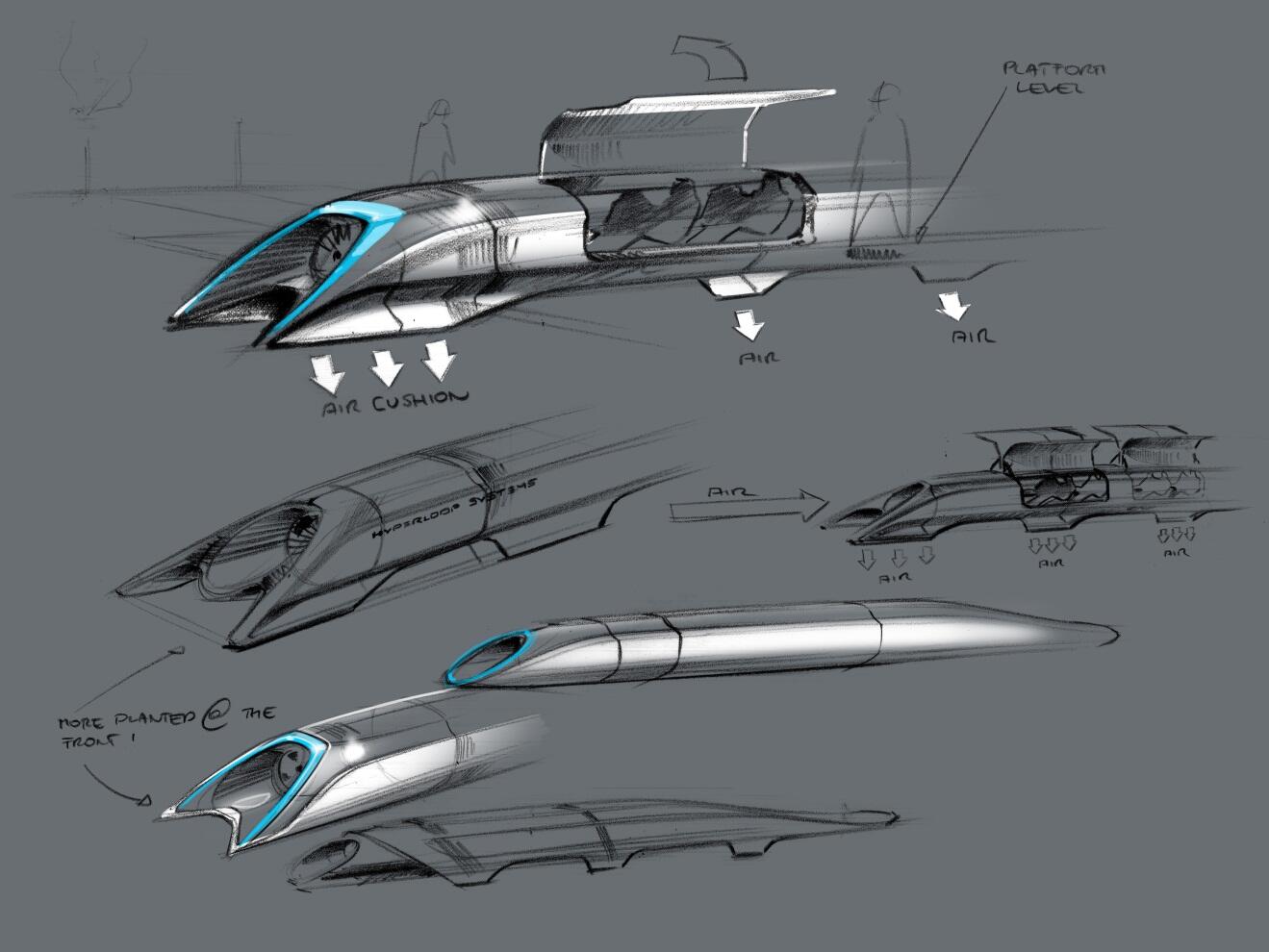
-What billionaire Elon Musk is finally telling us. 
Elon Musk is about to make an announcement about his Hyperloop project. The announcement is supposed to come sometime today. I wrote about this a few weeks ago, and will update this article when the announcement comes.  

Update: Elon Musk has released his project sketch just a few hours ago. Click here to see information on the project.


-A plane that can carry trains?


By 2050, could we see a plane that can pick up several trains of people and carry them to their destination? A group of students from University of Glasgow and the Glasgow School of Art in the UK have devised Horizon, a system in which planes would lift and drop moving railway carriage from and onto the ground. This could make transportation of people a lot quicker.

In a little over 30 years from now, this group imagines a person that wants to travel a long distance will start off in their neighborhood "Sky Station" where their luggage will be taken away from them. The person will then go through security and board one of these trains that can be picked up by aircraft. Once arriving at the destination, the plane attaches accordingly near the ground where it could let the passengers off these train cars.

-Apple reportedly will announce the next iPhone on September 10th.
According to rumors, the next Apple iPhone will be announced in less than a month. They also plan to announce details of the iOS 7, Apple's new operating system for both the iPhone and iPad. The next iPhone will come with an improved camera, improved internal system, and fingerprint technology. When asked about the recent rumors, Apple hasn't said anything more than "we will not comment on that matter."

Credit to Space.com and Bbc.com for the images. Also credit to Elon Musk's twitter for image.

Saturday, August 10, 2013

New Microsoft Surface Rumored and Device That Can Manipulate Brain Activity

Not many articles on the weekend, but here are a few stories going. The rumors of a possible Microsoft Surface have been reported and a new device that can record and manipulate brain activity is ready for testing on actual patients.

Latest Articles on Technology 

-New Microsoft Surface underway, says CEO.

Surface

The Microsoft sales for the Surface were abysmal, but the developers say that they are looking at bringing out the "Surface 2." Nvidia's Jen-Hsun Huang said that his company, whose computer chips power the Surface, say that Microsoft is working hard at a second generation Surface. Microsoft has already cut the prices of the original Surface a good amount and hopefully have learned what went wrong from their first product. On the topic of the Surface, Microsoft says "we have nothing to share."

-New implant device can manipulate and record brain activity.
A new brain implant device that can record brain activity and record data has been implanted in a person for the first time. A new device made by  Medtronic can adjust its electrical output in response to the changing conditions of the brain. Tests launched last Wednesday will test whether Medtronic's new device can safely record electrical activity while also delivering electrical currents.  The ultimate goal of this device is it to be able to treat and discover defects of a patient's brain.

Credit to Nbcnews.com for the image.

Monday, August 5, 2013

Curiosity’s One Year On Mars and First Ever Lab Meat?

It has been a year since Curiosity has been on Mars and the first ever meat that came from a lab are the stories that are going around the internet.

Latest Articles on Space

-Curiosity celebrates it’s first anniversary on the red planet. 


After one year of traveling the red planet, Curiosity’s intended mission of going up the steep mountain in a rigorous process. It still has about 4.4 miles to travel to get to it’s destination. Why is it taking such a long time to complete this process? Well scientists are being extra careful with the robot only traveling about 100 yards or so a day. Currently, it’s just driving over barren terrain and nothing interesting recently has been discovered. Over the course of this year, Curiosity has taking dirt and rock samples and has even dug into the  ground. This mission is expected to go it least another year. The team heading the projects expects for Curiosity to be exploring the red planet for even longer and the machine has stayed in overall “great” shape.

Latest Articles on Technology

-Read Meat that comes from the lab and not an animal.
Worth nearly $330,000, this red meat is the first of it’s kind. Researchers mix lab grown beef muscle cells with salt, egg powder and bread crumbs. It will be your typical burger.

The main innovative is to one day stop the killing of livestock animals and try to solve the looming food crisis. This industry hopes to solve the food crisis by 2025. Experts hope this artificial meat will be accepted and sold commercial like any piece of ordinary meat. Other companies are also taking a look at this type of technology. A California-based company called Modern Meadow is working with 3-D printing technology to create artificial meat as well as artificial leather. The leather products are farther along in the development process and the companies co-founder says that making artificial meat will take “a little longer.” Most expect the possibility of artificial meat in the late 2020′s.

Credit to Nytimes.com for the image.

Friday, August 2, 2013

Mars One Meeting and Neurodegenerative Breakthrough?

A potential nuerodegenerative disease treatment and a meeting for a potential mission to mars meeting are currently in the news.

Latest Articles on Space

-Mars One applicants to have meeting in Washington D.C. 

Mars One plans to launch an unmanned supply mission to the Red Planet in 2016

On August 3rd, the first meeting of applicants of Mars One will take place in Washington D.C. This meeting will feature talks from the founders of Mars One The non-profit organization intends to send humans to Mars by 2023.

Latest Articles on Health

-Nutritional therapy might be able to fix neurodegenerative disease.
Researchers from the University of California, San Diego School of Medicine have discovered a gene mutation for the particular disease, neurodegenerative disease. Based on testing, the team believes that a nutritional supplement could be used to reverse and treat the condition and this disease (as of now) can be curable.

Credit to Space.com for the image.

Wednesday, July 31, 2013

Hybrid Solar Power and Another Cancer Breakthrough?

Today’s articles discuss how 3-D printing technology will save the average family money and new type of “solar film” being developed.

Latest Articles on Technology

-Solar film turns smartphone and car into sun-powered devices.


Researchers at the University of California have developed a solar film that can be used on devices such as smartphones screens that can harvest energy the sun. “We anticipate this device will offer new directions for solar cells, including the creation of solar windows on homes and office buildings,” said head researcher Yang Yang. This type of technology is still in the development phase and there is no word when this product will enter the consumer market.

-At home 3-D printing could save the consumer tons of money.


 This is an interesting story about how 3-D printers could save the average person money. Researchers at the Michigan Technological University conducted the study that found that 3-D printer could bring additional benefits. These 3-D printers would bring benefits that would help the environment. More importantly, these products made by a 3-D printer are cheaper than if you had to buy them from a company. In the future, your local store might have a 3-D printer and could create products that you need. It is cheaper than going to a store and buying a retail model.

-Solar Power that works even when it’s not sunny.
The Advanced Research Projects Agency-Energy  is devoting thirty million to several demonstrations projects that will attempt to combine photovoltaics with solar thermal. This idea is that solar power could run all the time even if it is cloudy or raining that day or even during the night time. This could lead to a wide variety of innovations in our future.

Latest Technology in Health

-A cure for cancer – in the intestines?
As most people know, chemotherapy is a method of getting rid of cancerous cells. The side affect to chemotherapy is that it also targets good cells and can even kill a human if the person is exposed to too much chemotherapy overtime. Researchers might have found a way to disrupt the systems that chemotherapy brings (nausea, vomiting, etc) by regenerating intestine cells through stem cell technology. The research team has already tested this idea on mice and their theory of regenerating cells in the stomach. It worked and they are now in the process of offering this as a clinical trial in the near future.

Credit to Foxnews.com for the images.

Tuesday, July 30, 2013

New Discovery of Enzyme Could Lead to New Treatments?

Researchers have announced that they have discovered an enzyme that is responsible for repairing single damaged DNA strands through cell division. Experts hope that one day this could lead to new treatments of illnesses such as cancer and Parkinson’s disease.


 As we grow and get older, our cells multiply, a cell must divide into new cells, creating what are called “daughter cells.” Overtime, these new cells genome are exposed and are often at risk of exposure to diseases or defects. The body has a way to defend against most of these mutations. The researchers from the University of Texas Medical Branch in Galveston have now figured out how the process works. Using this data, researchers can look into the repair process and this becomes crucial for future medicines that may help treat diseases that we are all affected by. This shows the enormous progress that medical researchers have made and how much closer we are to solving the world’s worst diseases. 

Monday, July 29, 2013

Sony’s Panasonic Disc and Asteroid Exploration Ideas

The possibility of exploring Jupiter’s moon, Europa, and finger scanning technology in the next iPhone are stories being tossed around in today’s news.

Latest Articles on Space

-NASA is “flooded” with Asteroid Exploration ideas. 

 Asteroid Capturing Spacecraft Concept

Over 400 proposals have sent into NASA for an asteroid-retrieval mission that may happen in the future. The agency will review the ideas then release the best proposals that they may use for future projects in September. NASA says these proposals, mostly coming from private companies and other agencies, will hold the key to future exploration of asteroids in the solar system. One proposal as (as seen in the image above) shows a solar powered space craft moving an asteroid away from Earth so it can be explored or even mined. In the future, asteroids will be mined due to some of the precious elements they may hold. In fact, a company is already pursuing this idea.

-The idea of exploring Jupiter’s moon, Europa.
Experts say that Europa has salt water seas under a large thick ice could harbor life. Flybys and remote sensing can help scientists better understand this moon. In 2022 European Space Agency’s JUICE spacecraft will launch. It will arrive in 2030, and make a flyby by Europa twice. The idea of a rover and manned mission has also been discussed. Sending a rover or even a manned mission to Europa would create challenges. Europa has no atmosphere so sending a rover to ice layer and eventually under into the sea below would create great challenges. The idea of a man mission has been thrown around (to Jupiter and it’s moons) but of course the idea of sending people that far into deep space is decades away.

Latest Articles on Technology
 
-Sony and Panasonic promise a 300 gigabyte disc by 2015. 

DVD+R

Sony and Panasonic are pushing towards building the most powerful discs to date and plan to release theirs by 2015. Other rival companies will follow suit. Expect the new era of discs within the next two years.

-Laser experiments could lead to faster computer chips.
A change in a computer chip could lead to a creation of a smaller, faster, and more powerful computer. Researchers at the U.S. Department of Energy’s SLAC National Accelerator Laboratory reported that magnetite, a naturally magnetic mineral was found to have the fastest-possible electrical switching time. Published in the Nature Materials magazine, the team that is running experiments on this idea say there is still more work to do, but progress is being made.

-Biometric scanner code spotted in latest iOS 7 beta.
The word “biometric” has been spotted in the latest iOS 7 update suggesting that fingerprint identification technology is in the works to be in the next version of Apple’s iPhone. This could open up new paths to new innovations for the average person. It’ll be interesting to see what developers could create with this new technology.

Credit to Space.com and Nbcnews.com for the images.

Thursday, July 25, 2013

Getting to Mars and Back

A mission planned by Imperial College of London calls for a trip for astronauts to go to Mars and return back to Earth. The space craft would use ice from underneath the planet’s surface to create fuel for the return trip to our planet. Astronauts would travel in a 30 foot long ship that would launch on a typical rocket. Later in the journey, it would separate from a lander module but remain tethered via a cable.


Once in deep space, the lander would begin to spin and gain a common center of gravity, creating artificial gravity for the people on board the spacecraft. This vehicle would have a shield of water and superconducting magnets to protect the people on board from cosmic radiation. After a nine month trip to Mars, the astronauts would move into the lander, separate from the initial vehicle they were in, and descend towards the surface to the planet. Using parachutes and the lander, the astronauts would eventually make a landing on the red planet.

Radiation would be a major problem for the astronauts while they’re on Mars. They would have to find a way to shelter themselves from the radiation. The return trip to Earth would follow this similar process just going the other way. The diagram above gives you a good visual idea of the plan that they would follow.

Is this remotely realistic? A lot could go wrong between leaving Earth, going to Mars, and returning to Earth.